Libra and Gliese 581: Exploring the Myths and Reality of the Stars
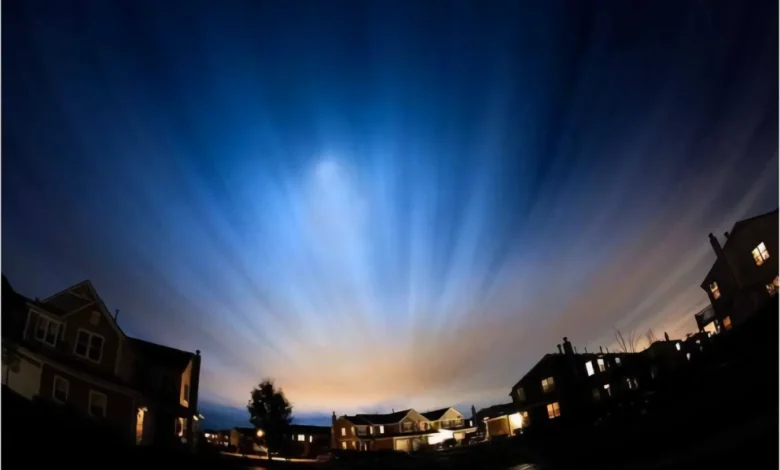
Libra, the faint constellation nestled between Spica of Virgo and Antares of Scorpius, may not dazzle with brilliant stars, but it carries profound mythological significance. In ancient times, it was considered part of Scorpius’s claws until the 1st century BC when it was officially recognized as an independent constellation and positioned near Virgo. Today, it symbolizes balance and justice, held aloft by the celestial scales of the goddess of justice.
The Celestial Jewels of Libra
Through detailed astronomical observation, Zubeneschamali (Alpha Librae) reveals itself as a wide binary star system easily distinguishable with binoculars. One component shines at magnitude 2.2 while its companion glows at magnitude 5.2, both orbiting approximately 77 light-years from Earth with an astonishing orbital period of 200,000 years. The brighter primary star itself constitutes a challenging-to-resolve binary system, remaining indistinguishable even through the most powerful telescopes. Meanwhile, Zubenelgenubi (Beta Librae) stands as one of the night sky’s rare green-hued stars, adding unique chromatic character to this constellation.


The Gliese 581 Planetary System and Observations
Gliese 581, a red dwarf located northeast of Beta Scorpii, resides a mere 22 light-years from Earth, ranking among our nearest known exoplanetary systems. Since the initial discovery of a Neptune-sized exoplanet in this system in 2005, astronomers have revealed between two to five additional exoplanets orbiting this star. Gliese 581c gained fame as one of the most Earth-like exoplanets discovered, while Gliese 581d captured scientific imagination with its orbit within the habitable zone, suggesting the potential for persistent liquid water on its surface.
Daily Astronomical Feature: Gliese 581’s Glow, Dark Nebulae, and Cosmic Dust
Gliese 581, this nearby red dwarf only 22 light-years distant, captivates astronomers not only for its potentially habitable planetary system but also for the celestial environment it inhabits. Within this brilliant region of space, dark nebulae and cosmic dust create veils of mystery, enhancing the cosmic drama. When night falls and we gaze upon this stellar neighborhood, we feel as though we’re touching the edge of the universe and sensing the infinite charm of unknown worlds.
Libra’s Connection to Cosmic Wonders
The magnificent star field encompassing the Cepheus region of the Milky Way’s disk spans approximately two full moons in width. In the lower right-center of such images, the Cave Nebula (Sharpless 155) appears as a bright reddish region showcasing the magnificent boundary of a massive molecular cloud some 2,400 light-years away. This 10-light-year-wide cavern’s gaseous walls glow brilliantly when excited by nearby hot, young stars. The star field also features blue reflection nebulae created by dust scattering starlight and dense dark dust clouds like vdB 155 in the upper left. Astronomical observations further reveal other stellar birth signatures, including the bright reddish patch known as Herbig-Haro 168. This HH object, located near the image’s upper central edge, glows from the high-speed jets emitted by newborn stars.
Libra’s Astronomical Significance in Modern Context
While Libra itself may appear modest in the night sky, its position and the astronomical wonders nearby make it a fascinating area for both amateur and professional astronomers. The constellation’s balanced nature mirrors the delicate cosmic balance we observe in systems like Gliese 581, where multiple planets orbit in careful harmony. This celestial equilibrium reflects the Libra personality’s natural inclination toward harmony and balance in all aspects of life.
For those born under the sign of Libra, the connection to these cosmic wonders runs deeper than mere coincidence. The constellation’s association with justice and balance extends to the precise orbital mechanics governing planetary systems and the delicate conditions necessary for life to emerge. Just as Libra individuals seek equilibrium in relationships and decisions, the universe maintains its own balance through gravitational forces and cosmic cycles.
Stargazing Tips for Libra Enthusiasts
To best observe Libra and its celestial neighbors, find a location with minimal light pollution during spring and early summer months in the Northern Hemisphere. While Libra’s stars may require some patience to identify initially, their connection to nearby celestial wonders like the Gliese 581 system makes the effort worthwhile. Remember that the cosmic scales represented by Libra extend beyond mythology into the very fabric of our universe, where gravitational balances and orbital resonances create the stable environments where life might potentially flourish.
As we continue to explore systems like Gliese 581 and study constellations like Libra, we bridge the gap between ancient mythology and modern scientific understanding, discovering that the balance represented by this celestial scale extends throughout the cosmos in ways both beautiful and profound.